Cultivation and harvesting
Where Does Makhana Come From?
A closer look at the wetlands and water bodies connected with makhana.
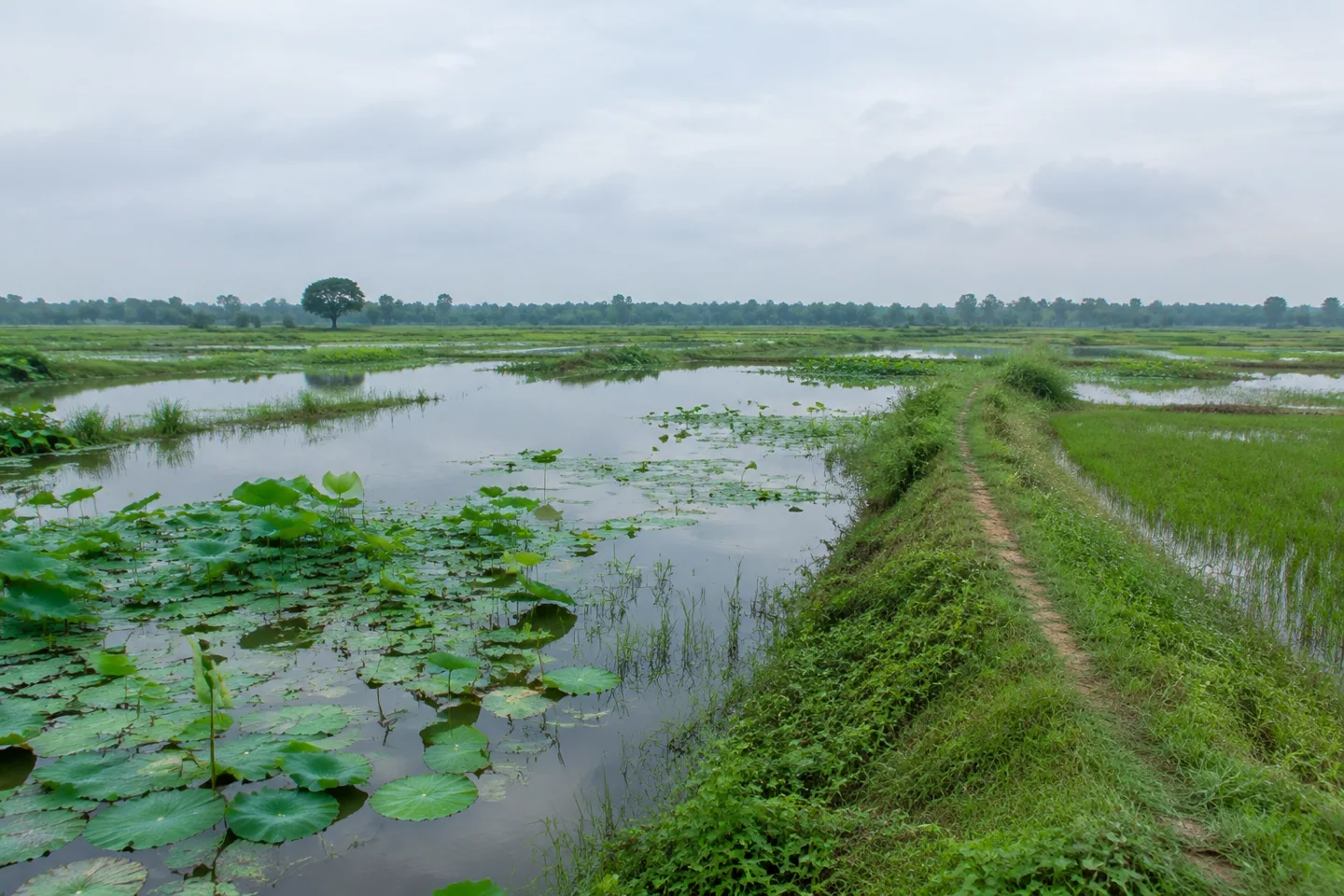
A crop connected to water
Makhana grows in aquatic settings including ponds, wetlands, and low-lying waterlogged areas. The plant’s environment is part of the story behind the seed.
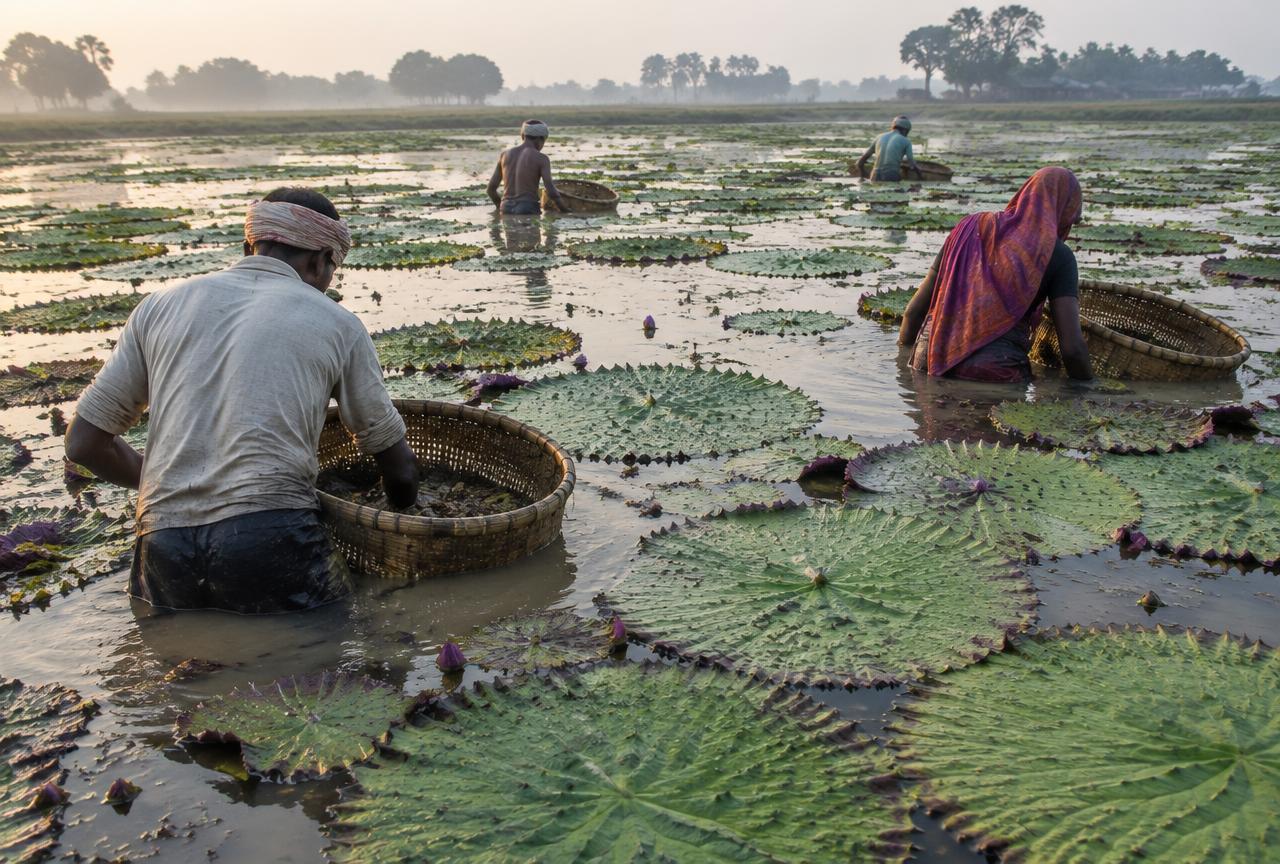
Hard, hand-done work
Makhana harvesting is among the more demanding kinds of farm work. After the fruit ripens and bursts, seeds sink into the mud; workers wade or dive into the pond to collect them, then wash and sieve them in baskets. Much of this is still done by hand.
A regional connection
North Bihar is strongly associated with makhana cultivation, including districts around the wider Mithila–Kosi region. The places named in KOSI’s story reflect regional inspiration, not a claim about the origin of every future batch.
A broader supply chain
Cultivation, harvesting, collection, processing, and trade involve different people and steps. KOSI is developing its sourcing network and does not claim to own farms or represent every stage directly.
Further reading: ICAR overview of makhana cultivation.
Back to Knowledge Centre