Whole pieces
Consider when appearance and intact texture are important.
Discover Makhana
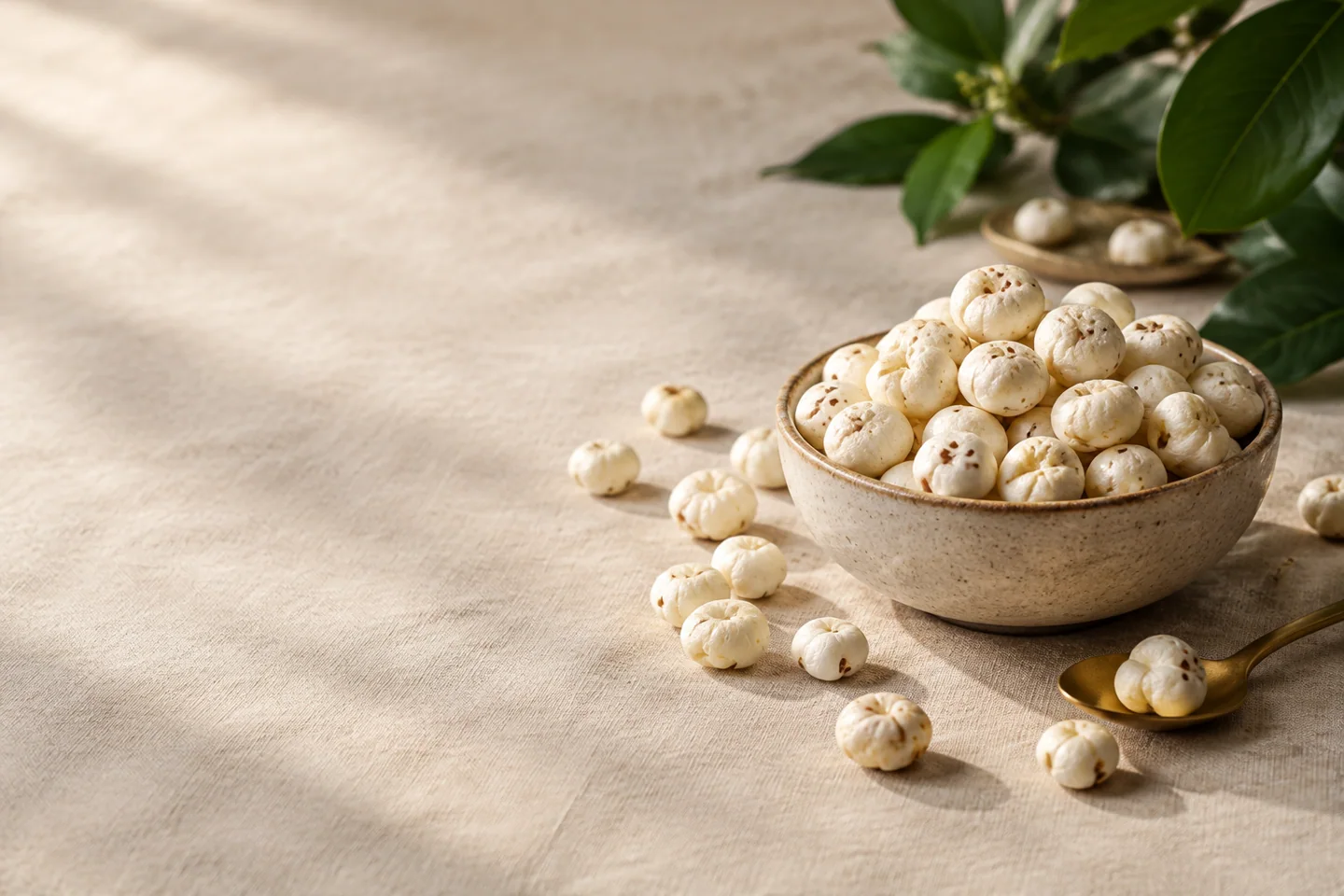
Makhana—also known as fox nut or gorgon nut—is the edible seed of Euryale ferox. The familiar popped kernel is one stage in a longer journey from aquatic growing environments to food ingredient.
Botanical background
The makhana plant, Euryale ferox, grows in aquatic environments. Its edible seed is gathered and processed, then the kernel expands when popped to become the light, familiar ingredient used in Indian kitchens.
Makhana cultivation is strongly associated with Bihar, including parts of North Bihar. Individual product origins and batch details should be confirmed with the supplier.
Background: ICAR–National Research Centre for Makhana.
From cultivation to supply
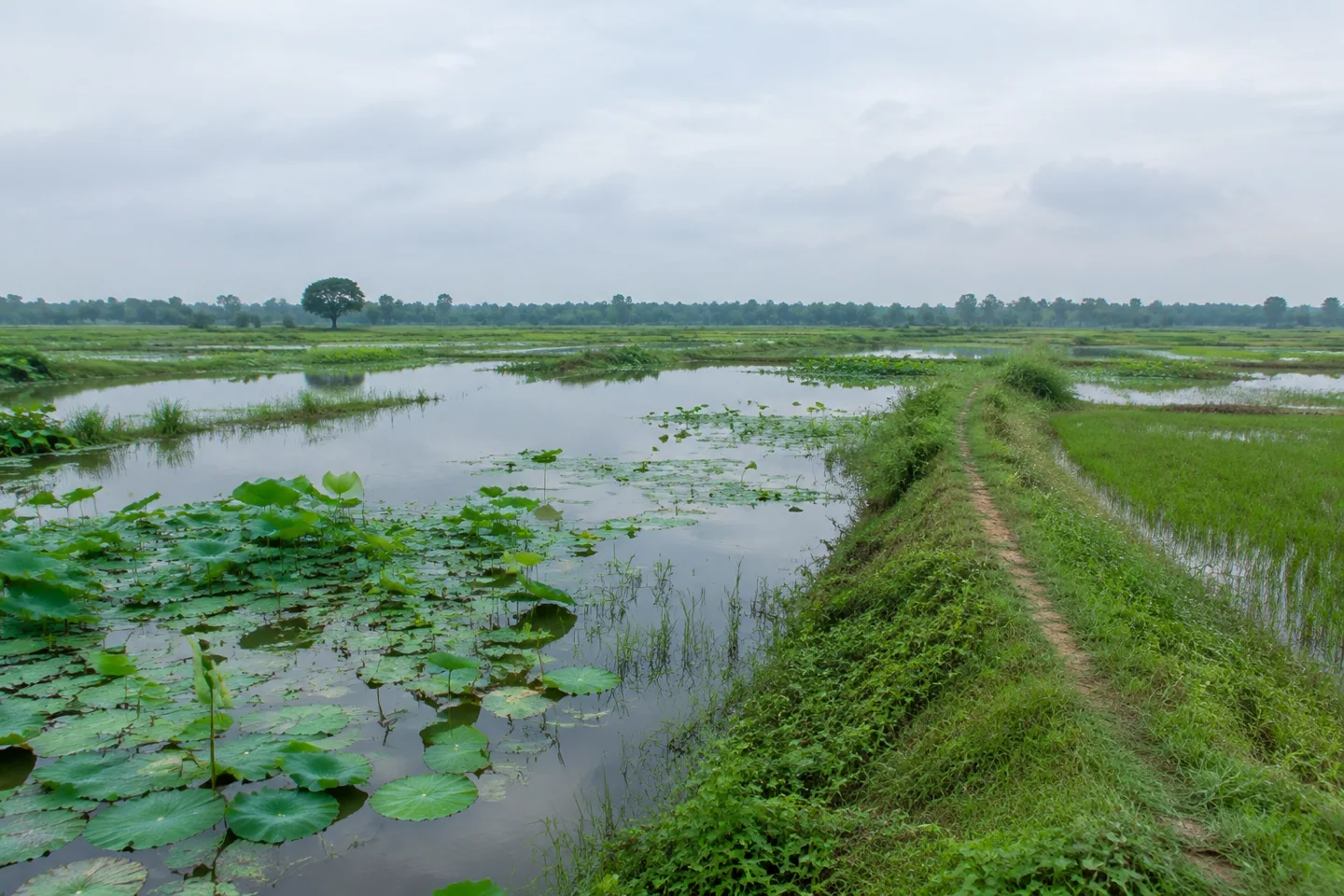
Makhana grows in aquatic environments such as ponds, wetlands, and waterlogged fields.
Mature fruits and seeds are gathered from the growing environment using local methods.
Seeds are collected and separated as part of the post-harvest journey.
Collected seeds are cleaned and dried before subsequent handling and processing.
Processing methods prepare the seed so its edible kernel expands into popped makhana.
Popped product can be sorted by appearance, size, and whether pieces are whole or broken.
Samples are reviewed against a buyer’s requirements and the details of the available batch.
Packaging and dispatch arrangements are discussed for the particular order and destination.
For background on the crop and its cultivation, see the ICAR overview.
Whole and broken
Consider when appearance and intact texture are important.
Consider for recipes where the ingredient is crushed, simmered, or blended.
A possible ingredient form for selected recipes and preparations.
In the kitchen
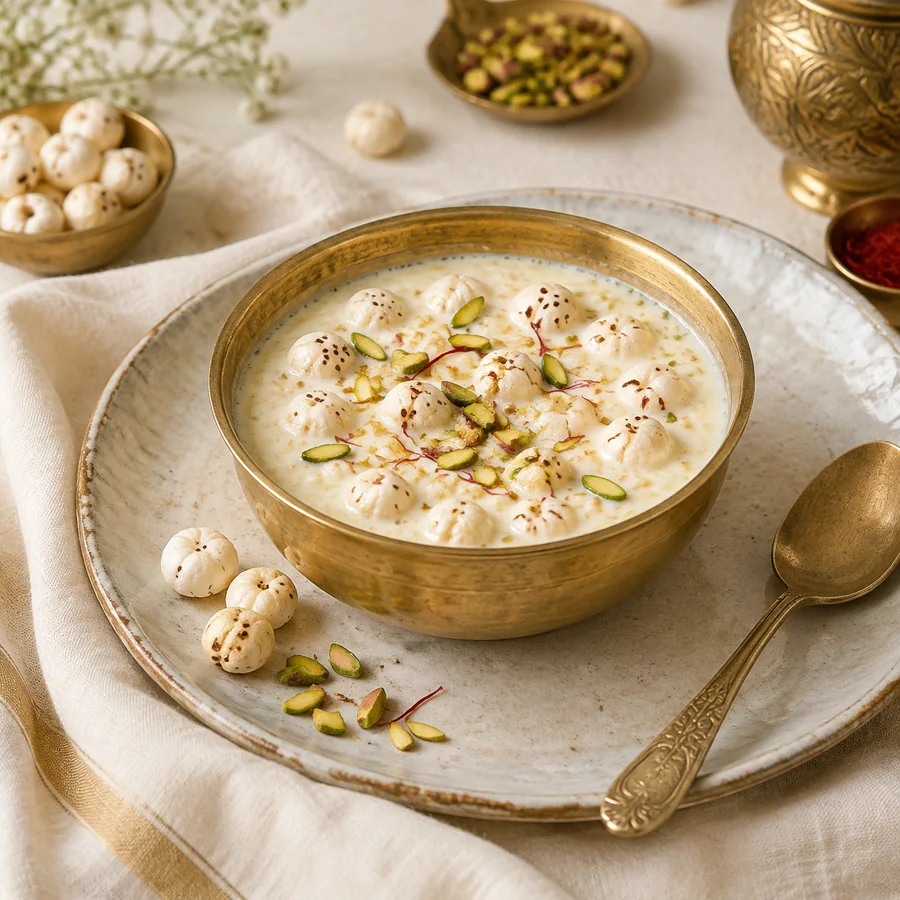
Makhana can be roasted, simmered in kheer, shaped into laddus, milled into flour, or added to porridge and other traditional or contemporary preparations. These are educational ideas, not a list of finished KOSI products.
Read kitchen ideasFor product and supply enquiries
Share the grade, quantity, and product details you have in mind. We can discuss what may be suitable against the available batch.