Size and diameter
Compare the size distribution within the available batch against the intended use.
Sourcing & Processing
Makhana moves through a chain of growing, collection, processing, sorting, and supply. The exact stages and methods vary across operators and batches.

The broader supply chain
Makhana grows in aquatic environments such as ponds, wetlands, and waterlogged fields.
Mature fruits and seeds are gathered from the growing environment using local methods.
Seeds are collected and separated as part of the post-harvest journey.
Collected seeds are cleaned as part of post-harvest handling.
Seeds are dried before subsequent handling; practices can vary by operator and batch.
Roasting and other processing methods prepare the seed so its edible kernel expands.
Popped product can be sorted by appearance, size, and whether pieces are whole or broken.
Samples are reviewed against a buyer’s requirements and the details of the available batch.
Packaging preferences are discussed and confirmed for a potential order.
Dispatch arrangements are discussed for the particular order and destination.
Further background: ICAR’s overview of makhana describes traditional seed roasting and popping as a multi-stage process.
What buyers can evaluate
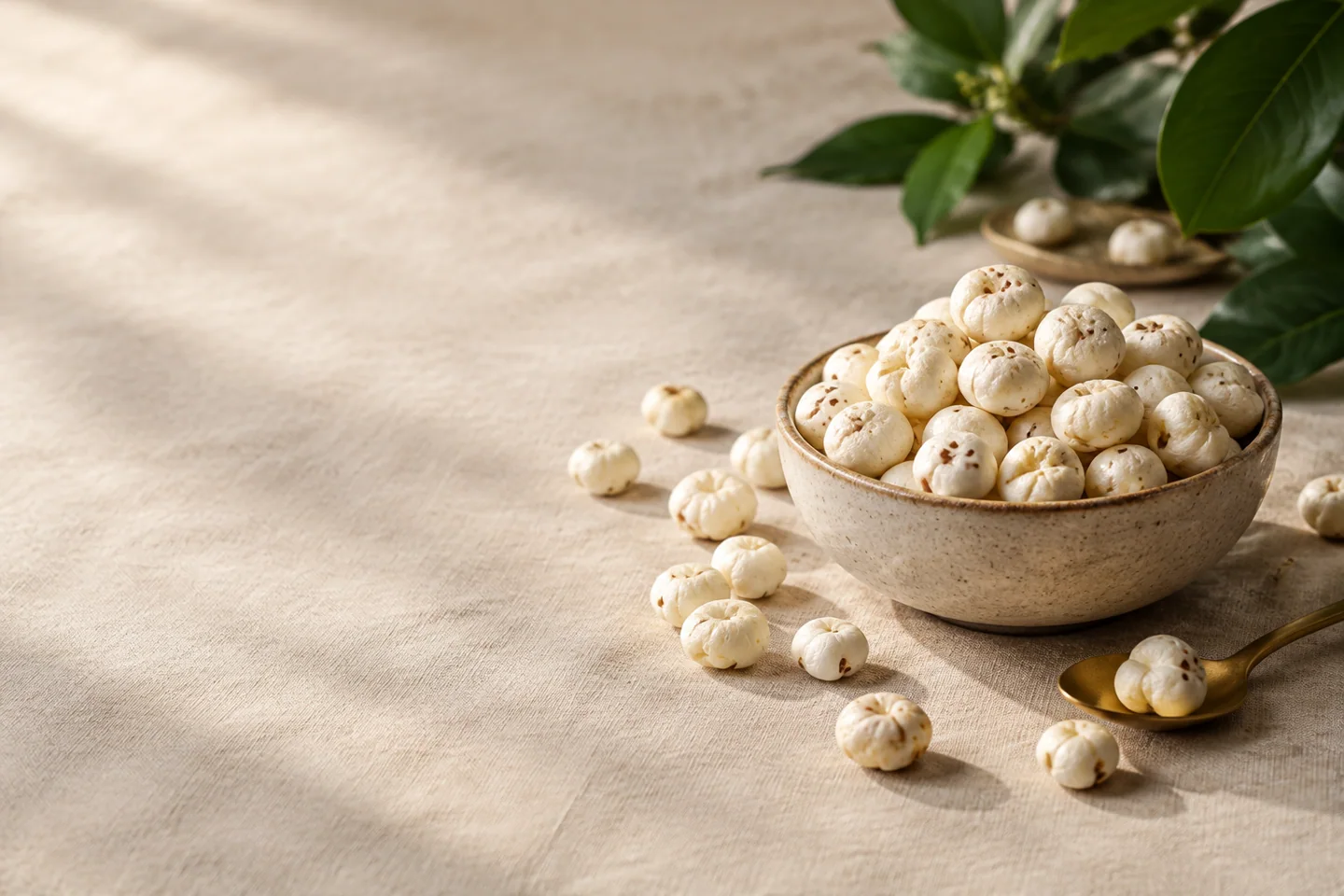
Before confirming a product specification, buyers can review a representative sample, discuss the desired grade, and note the characteristics that matter to their application.
The details to confirm may include size, whole-to-broken composition, colour, cleanliness, moisture, texture, freshness, foreign matter, and batch consistency.
A practical checklist
Compare the size distribution within the available batch against the intended use.
Review how much of the lot is intact and how much is made up of pieces or fragments.
Look for the colour range and visual consistency that suit the buyer’s specification.
Evaluate moisture for the product’s condition, packaging plan, and intended storage.
Check the product for cleanliness and any material that does not belong in the lot.
Taste and handle a sample to assess crispness, texture, and overall condition.
Inspect the sample for unwanted material before confirming a product specification.
Compare representative samples and confirm the details for each available supplier batch.
For product and supply enquiries
Share your intended application and the product qualities that matter most. Sample availability and commercial terms are confirmed case by case.